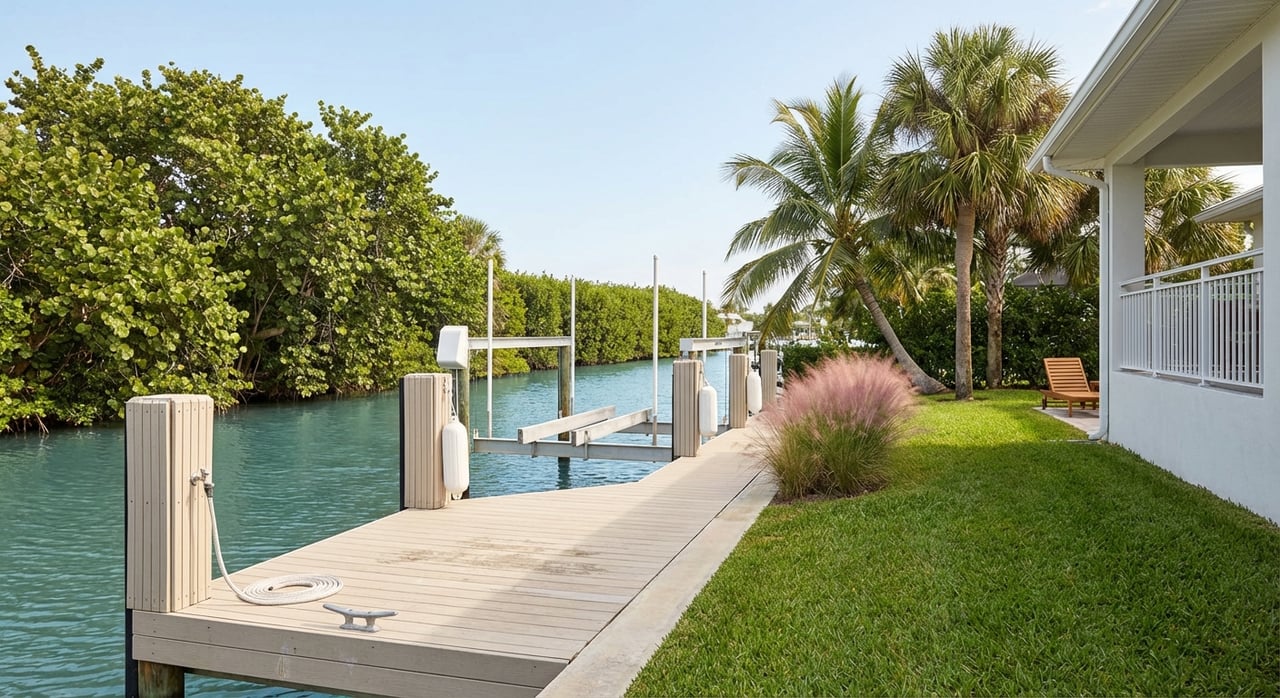
If your perfect Florida day starts at the helm, you’re probably asking whether The Moorings in Vero Beach can really support a serious boating lifestyle. You want protected dockage, dependable depths, straightforward inlet access, and clear rules before you buy. In this guide, you’ll learn what the community truly offers boaters, what to verify before you write an offer, and how nearby alternatives compare if you need more services or larger slips. Let’s dive in.
The Moorings at a glance
The Moorings sits on the south end of Vero Beach’s barrier island with direct access to the Indian River and the Intracoastal Waterway. It combines a private yacht and country club with a large waterfront residential community. The club publishes arrival-by-boat guidance and directs skippers to NOAA Chart 11472 for approaches, so you can plan with solid references before you arrive (club arrival info).
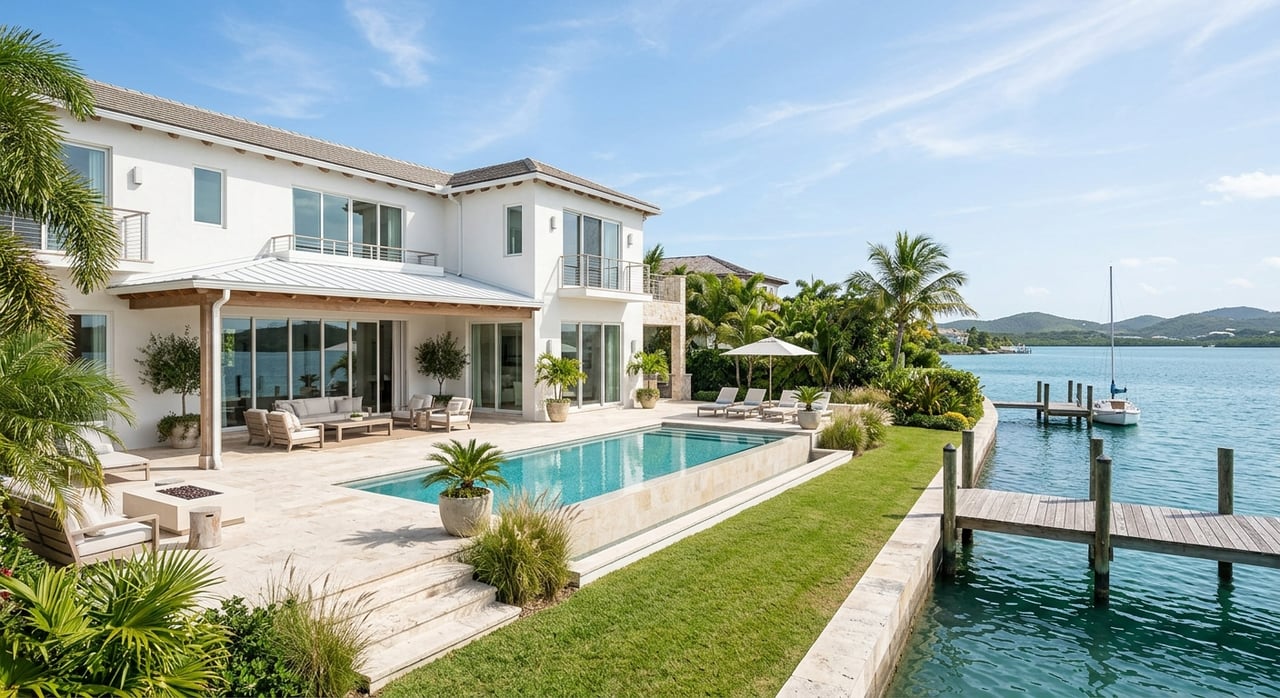
Scale matters when you are a boater. Listings and marina directories describe a community of roughly 535 acres and over 1,200 residences, with commonly quoted dock depth figures for club docks that show meaningful water under the keel in the core basins (Moorings marina overview). Local reporting goes further, citing about eight miles of deepwater bulkhead and approximately 675 docks across the community, plus small marinas such as Spyglass Harbor and Harbour Side that operate as resident-focused harbors (local slip market report).
Why serious boaters choose it
Protected canals and semi-private harbors give you everyday convenience without open-water exposure. Spyglass Harbor has even been described as a longstanding hurricane hole in past storms, which is attractive if you value sheltered moorage and a low-activity setting (local slip market report).
You will find a mix of private house docks, association marinas, and club-adjacent docks. Marina directories cite generous dock depths at club docks, which is encouraging, but actual approach and slip depths can vary by canal and tide. For any vessel with draft constraints, plan to verify depths at low tide and confirm maneuvering room before you commit (Moorings marina overview).
Slip types and ownership basics
You will encounter three common arrangements:
- Private house docks that are built and maintained by the homeowner.
- Association marinas like Harbour Side Yacht Club where slips may be governed by proprietary leases or association documents.
- Small harbors such as Spyglass where slips are bought and sold through the association with rules that protect the residential environment. Reported rules include no sleep-aboard, limits on fueling, and restrictions on major repairs on the dock (local slip market report).
The key takeaway is simple. Always request the exact slip’s legal form, transfer rules, dues, maintenance responsibilities, and marina regulations in writing before you write an offer (local slip market report).
Access, inlets, and bridges
From most Moorings slips, Fort Pierce Inlet is often a short, direct run on the ICW. Local reporting and listings commonly cite about 7 to 9 nautical miles to Fort Pierce Inlet, depending on your exact starting basin. Use your boat’s cruising speed and coordinates to calculate your time to sea (local slip market report).
Sebastian Inlet to the north changes with shoaling and is best handled with local knowledge. The Sebastian Inlet District documents dredging and jetty work, so check updates and Notices to Mariners before planning a run in that direction (Sebastian Inlet District updates).
Bridge clearances in the main Vero Beach spans are generally friendly to cruising rigs. The SR-60 Merrill P. Barber Bridge is cited around 60 feet of vertical clearance, which accommodates most masts under that height. Always verify current clearances and any opening schedules for your route (Merrill Barber Bridge reference).
Rules and environmental realities
Residential marinas often limit sleep-aboard, fuel delivery, and major repair work to keep the environment quiet and safe. Spyglass Harbor is a clear example, with reported restrictions that reduce heavy on-dock activity (local slip market report).
The Indian River Lagoon aquatic preserve from Vero Beach to Fort Pierce is designated a No-Discharge Zone. That means you cannot discharge treated or untreated sewage from vessels in these waters. Plan pump-outs and holding-tank management accordingly and observe manatee slow zones when underway (NDZ background).
Market snapshot and nearby options
Inventory for large slips is tight and prices have risen, especially for 45 to 100 foot capacity slips in favored basins. Sales are competitive and listings for very large slips are rare, so it pays to move quickly when a suitable slip appears (local slip market report).
If you need deeper water, haul-outs, or larger-yacht capacity, consider complementing a Moorings home dock with a slip elsewhere:
- Loggerhead Marina at Grand Harbor offers a full-service, protected setting with wet slips for larger yachts and on-site marina services (Loggerhead Vero Beach Marina).
- Vero Beach Municipal Marina provides transient and seasonal slips, fuel, pump-outs, and a harbormaster. It is convenient for services and short stays, though long-term large-yacht capacity is limited (City marina info).
- Fort Pierce marinas and yards list travel lifts, haul-out capacity, and direct inlet proximity. Many large-yacht owners stage ocean runs and maintenance there (Fort Pierce marinas overview).
Serious boater due diligence checklist
Before you make an offer on a home or slip in The Moorings, verify:
Legal rights to the slip: fee simple, proprietary lease, or association assignment. Confirm transfer rules and any right of first refusal (local slip market report).
Depths at low tide: get a recent sounding for the approach and at the slip, not just an anecdote. Tides and shoaling matter (Moorings marina overview).
Maneuvering room: confirm canal width and turning basin suitability for your length and windage (Moorings marina overview).
Marina rules: check sleep-aboard limits, fueling policies, repair restrictions, and guest policies in writing. Spyglass has reported restrictions on sleep-aboard, on-dock fuel, and major repairs (local slip market report).
Dredging and inlet reliability: review Sebastian Inlet District updates and Notices to Mariners for changing conditions (Sebastian Inlet District updates).
Haul-out and repair options: identify travel-lift capacity and lead times in Fort Pierce or Grand Harbor (Fort Pierce marinas overview).
Storm planning: request the marina or association’s written hurricane plan. Some basins are favored storm refuges, but policies and insurance requirements vary (local slip market report).
Environmental rules: understand NDZ requirements, pump-out logistics, manatee zones, and seagrass protections (NDZ background).
Insurance and operating costs: consult marine insurers who write Florida hulls and waterfront homes to model premiums and storm deductibles.
Bottom line: is it right for you?
If you want a protected, residential-scale marina environment with club amenities and a quick run to the ICW, The Moorings is a strong fit. You can keep your boat close to home, enjoy quiet basins, and access the river and ocean when the weather cooperates.
If your priority is frequent haul-outs, on-dock fueling, and a full-service yard for an 80 to 120 foot yacht, plan a hybrid strategy. Pair a Moorings residence with a large-service slip in Grand Harbor or Fort Pierce, and verify that your specific Moorings approach and turning room match your draft and length.
Ready to evaluate a home or slip with a clear boating lens? Connect with Kathleen Provancher for hyperlocal guidance on depths, slip rules, and the right purchase strategy in 32963.
FAQs
What boating infrastructure does The Moorings offer?
- The community combines private house docks, association marinas like Harbour Side, small harbors such as Spyglass, and club-adjacent docks, with about eight miles of bulkhead and roughly 675 docks reported locally.
How far is The Moorings from an ocean inlet?
- Many slips are about 7 to 9 nautical miles from Fort Pierce Inlet via the ICW. Calculate your time based on your exact slip location and cruising speed.
Are live-aboards allowed in Moorings marinas?
- Rules vary by basin, but Spyglass Harbor has reported no sleep-aboard, fueling limits, and restrictions on major repairs. Always review current marina documents before you commit.
What bridge clearance affects sailboats near Vero Beach?
- The SR-60 Merrill P. Barber Bridge is cited around 60 feet of vertical clearance. Confirm clearances and opening schedules for your specific route.
What is the Indian River No-Discharge Zone?
- The Indian River Lagoon aquatic preserve is an NDZ where vessel sewage discharges are prohibited. Plan regular pump-outs and follow manatee slow zones.
Do I need club membership to own or use a slip?
- Club membership and slip rights are separate. Membership provides club amenities, while slip ownership or leasing is governed by specific marina or association rules. Confirm any tie-ins or transfer requirements with the seller and the club (club membership overview).