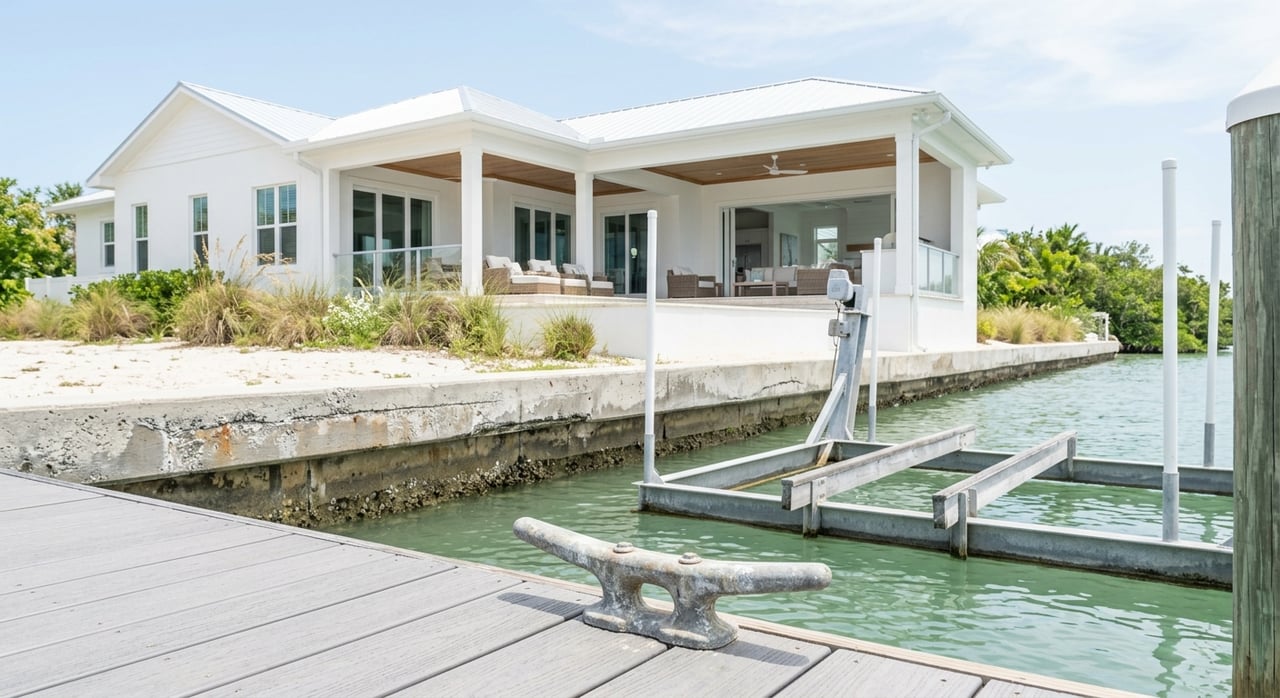
If your perfect Vero Beach day starts with coffee on the lanai and a quick run to the Intracoastal, Cache Cay belongs on your shortlist. As a boat owner, you care about more than a pretty water view. You want reliable depth, an easy approach, secure tie-offs, and a fast route to open water. In this guide, you’ll learn exactly what boating buyers look for in Cache Cay listings and how to present those features so your home stands out. Let’s dive in.
Why Cache Cay draws boat owners
Cache Cay is a small, guard-gated island neighborhood on the barrier island with canals, river frontage, and private docks. Many homes offer direct access to the Indian River Lagoon and the Intracoastal Waterway, which makes daily boating simple. The local tidal range is modest, but it still matters for draft at low tide. The City of Vero Beach’s marina planning notes roughly three-quarters of a foot between mean high and mean low water nearby, so it is smart to confirm low-tide depth before you list or buy. You can see that small tidal amplitude noted in the City’s Marina Master Plan.
What boating buyers screen first
Depth you can trust
Depth is the number one filter. Buyers compare your usable depth at the dock and in the approach channel to their boat’s loaded draft plus a safety margin. Best practice is to state depth at mean low water and show how it was measured. For an overview of draft and safety margins, see this plain-language guide on planning for usable depth at low tide.
What to do as a seller:
- Obtain a recent low-tide sounding tied to MLW or NAVD88 and include the date.
- State “Usable depth at dock (MLW): X ft” in your listing facts.
- Disclose any shoaling history or dredge permits and who maintains the canal.
- If you do not have a sounding, say so and recommend a buyer verification.
Approach, layout, and turning room
A solid depth reading is only half the story. Buyers visualize the approach, turn, and tie-up in typical winds. T-heads or wider finger piers make end-ties easier, while narrow fairways can limit the practical LOA even if depth is adequate.
What to do as a seller:
- Provide aerial or oblique photos that show neighboring docks and the fairway.
- Note measured fairway width and any posted LOA or beam limits.
- Include recent piling or dock engineering reports in your property packet.
Lifts, shore power, and utilities
Convenience sells. A properly sized lift, reliable shore power, and clean water access matter to daily boaters. Buyers want the lift’s model, capacity, and service records, plus clear photos of breakers and shore power boxes. Installed lift pricing varies widely by size and type, as outlined in this overview of hydraulic lift costs and configurations.
What to do as a seller:
- List lift capacity, make, model, install date, and last service.
- Specify shore power amperage at the dock and show the panel in photos.
- Highlight dock lighting, potable water, and secure cleats.
Route to the ICW and inlets
Daily runs to Sebastian Inlet or Fort Pierce Inlet shape a buyer’s decision. Short, predictable routes with minimal bridges are a plus. Be ready to quantify nautical miles, typical transit times at a common cruising speed, and any fixed bridge clearances. For context on trip planning in the area, review a sample Vero Beach to Fort Pierce route.
What to do as a seller:
- Map a pragmatic route from your dock to one or both inlets.
- Note fixed bridges on the route and their vertical clearances.
- Estimate typical transit time including no-wake and slow zones.
- If you claim “no bridges,” include an explicit route and bridge table.
Seawall and shoreline condition
A tired seawall can derail a deal. Buyers look for construction type, cap condition, signs of undermining, and permit history. In Indian River County, dock and seawall work usually requires county review and sometimes state or federal approvals. Review the County’s dock and seawall permit checklist so your documentation is complete before you list.
What to do as a seller:
- Order a pre-listing marine inspection and include the one-page summary.
- Assemble permits, plans, and any repair records for the seawall and dock.
- Avoid last-minute seawall work without proper permits.
Outdoor living and boat staging
Buyers picture the whole experience. Secure staging for tenders or PWC, a tidy washdown area, accessible hose bibs, and an uncluttered path to the dock reduce daily friction.
What to do as a seller:
- Stage the dock with neat lines and fenders and show a boat on the lift if possible.
- Highlight trailer access or parking and dedicated storage solutions.
- Call out built-in washdown or broom-drain systems.
Services and storm planning
Proximity to fuel, haul-out, and trusted service yards is part of the value. Buyers also ask about storm readiness. Atlantic hurricane season runs June 1 to November 30, per the National Hurricane Center, and many owners prefer a prearranged haul-out plan with a local yard.
What to do as a seller:
- List nearby marinas, fuel options, and haul-out yards in your property FAQ.
- Note any existing service relationships or storm plans you can transfer.
Seller action plan for Cache Cay
Immediate, low-cost wins
- Build a marine file: survey, riparian or shoreline easements, dock and seawall permits, lift model and service records, any dredge history, and a flood elevation certificate if available. The County’s permit checklist shows what buyers and reviewers expect.
- Order a pre-listing seawall and dock inspection and share the summary.
- Update listing facts with concrete numbers: depth at dock (MLW), lift capacity, shore power amperage, fairway width, and inlet route details.
- Invest in great visuals: drone shots showing approach and fairway, twilight dock lighting photos, and crisp breaker box images.
Medium, high-ROI upgrades
- Tackle safety and maintenance items: replace worn cleats, resecure pilings, refresh electrical to a safe shore box, and add dock lighting. Typical small dock repairs vary by scope, but they often deliver strong ROI by reducing buyer risk. You can review general cost ranges in this dock repair overview.
- Add or certify a boat lift if depth supports it and buyers in your price tier expect one. Provide proof of professional installation and permits. For broad pricing context by lift type, see this lift pricing guide.
- Refresh the seawall cap or failing timbers where needed. In low-energy lagoon settings, consider a living shoreline approach if appropriate. UF/IFAS explains how living shorelines can cost less than full armored seawalls and provide environmental benefits, subject to permits.
Larger, permit-level projects
- Major seawall work: secure engineer plans, County permits, and any state or federal authorizations before advertising recent replacements.
- Dredging or channel work: expect multi-agency review. If dredging has been done, include as-built permits, dates, and maintenance responsibility in your file. Start with the County’s dock and seawall permit requirements to understand submittals.
Due-diligence checklist for your listing
- Current boundary survey and any recorded riparian or shoreline easements.
- Dock and seawall permit history plus signed and sealed drawings if available.
- Depth or sounding report tied to MLW with measurement date.
- Boat lift model, capacity, installation date, and last service.
- Seawall and dock inspection summary with photos and any repair estimates.
- Flood zone panel or elevation certificate and relevant insurance history.
- HOA documents, including any rules that apply to docks and shorelines.
Present your waterfront with confidence
When you present depth, approach, utilities, and access clearly, you remove uncertainty and attract serious boating buyers. That is how you protect value in a Cache Cay sale and shorten time on market. If you want hands-on help packaging your marine file, coordinating pre-listing inspections, and marketing to qualified waterfront buyers, connect with Kathleen Provancher for concierge-level guidance backed by One Sotheby’s global reach.
FAQs
How much depth do I need at a Cache Cay dock?
- Measure your boat’s loaded draft and add a safety margin, then confirm usable depth at mean low water. Many larger boats need 3–5 feet at MLW, while smaller center consoles often need 1–2.5 feet. See this overview on draft and low-tide planning.
Can I add a lift or replace a seawall before closing in Indian River County?
- Yes, but both typically require County permits and sometimes state or federal approvals. Review the County’s dock and seawall permit checklist for required submittals and timelines.
Are living shorelines an option instead of a seawall in the Indian River Lagoon?
- In many low-energy lagoon settings they can be a viable, often lower-cost alternative that also supports habitat, subject to site conditions and permits. Learn more from UF/IFAS on living shoreline benefits and costs.
How far is Cache Cay by boat from the nearest inlets?
- Runs to Sebastian Inlet and Fort Pierce Inlet are typically several to low-teens nautical miles depending on your exact location and route. For planning context, review a sample Vero Beach to Fort Pierce route and factor in no-wake zones.
What information should a Cache Cay seller include about the dock?
- Share concrete details: usable depth at MLW with date, approach fairway width, lift specs and service records, shore power amperage, seawall inspection summary, route to the inlet, and relevant permits. Start with the County’s dock and seawall permit checklist to build a complete marine file.