Vero Beach Magazine ran a photograph a few years ago of Joe Earman, then chairman of the Indian River County Board of County Commissioners, standing on a lagoon island named for his late grandfather, who was also Joe Earman. Vero Beach Magazine reported that county staff took the picture on a visit to the island during restoration work. The elder Earman spent his whole life in Vero Beach. He was a World War II veteran and founded Earman Oil Co. in 1949, according to his Vero News obituary.
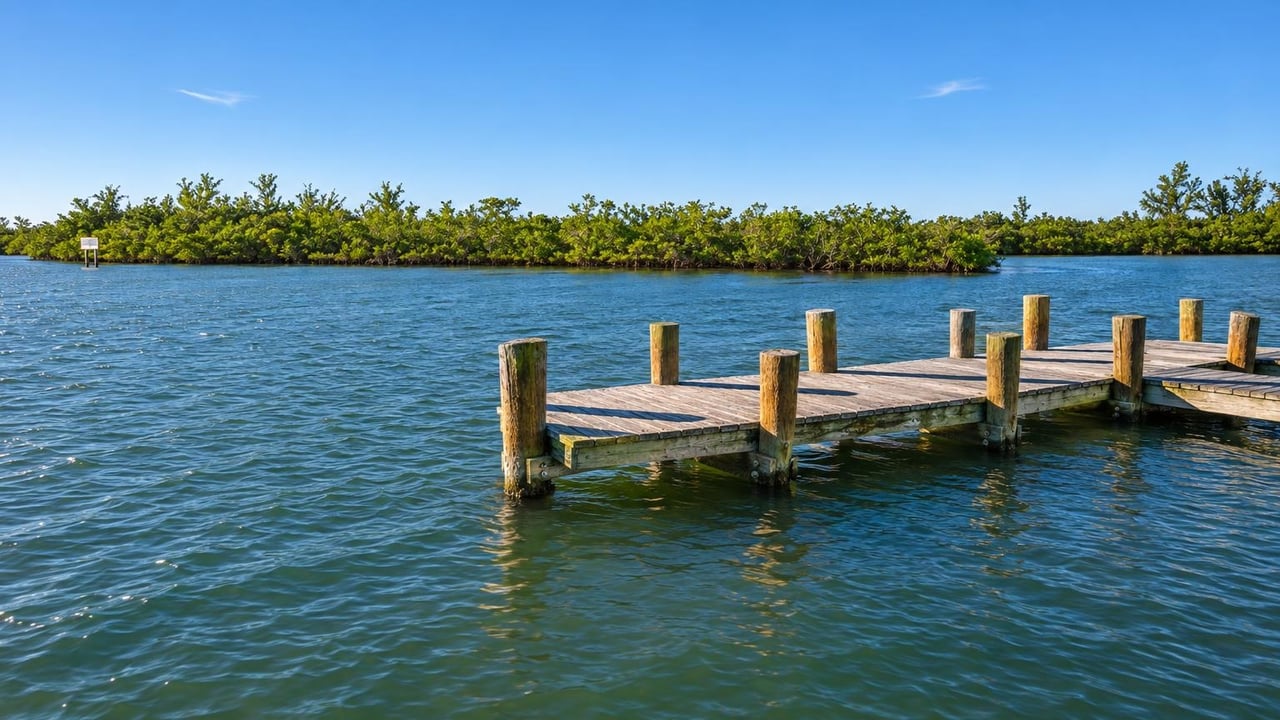
The island with his name is in the Indian River Lagoon, offshore from Grand Harbor. It belongs to the public, and its dock is open every day of the year.
Joe Earman Island Is the Front Door to 508 Acres
Joe Earman Island is the public entrance to the Lost Tree Islands Conservation Area, a 508-acre county preserve. Its dock is about 1.5 miles north of the Merrill Barber Bridge. The county lists the area as open sunrise to sunset, 365 days a year. Amenities include two picnic pavilions, two grills, walking trails and the dock, and short-term camping is allowed. Fires go only in the designated fire pits.
The county's Lost Tree Islands page lists the posted rules for the site and is the place to read them before a trip.
Joe Earman Island has two neighbors in the conservation area, Duck Head Island and Hogs Head Island. All three are natural islands that dredge spoil built up over the years. The county's plan opens Joe Earman and Duck Head to the public and keeps Hogs Head for wildlife only. When you're on the water, Hogs Head is the one to admire from the boat.
How the Islands Stayed Public
Lost Tree Village Corporation, which owned the islands, had development plans underway by the mid-1980s. In 2003, Indian River County, the City of Vero Beach and the Town of Indian River Shores bought the islands together for a reported $15.1 million to keep them from being developed, TCPalm reported. The company says a Florida Communities Trust grant and a bargain-sale donation made the deal possible.
Restoration has taken most of the time since then. The county called the project its largest lagoon restoration effort to date when it held a public design meeting in October 2021. Most of the work is pulling out invasive plants and replanting natives. Wendy Swindell, the county's conservation lands manager, explained to Vero Beach Magazine why the replanting comes before the crowds: "because when more people start going out there, we don't want it to look like a moonscape." The Indian River Lagoon National Estuary Program's Q2 2024 newsletter reported Phases 1 through 3 complete and Phase 4 underway, covering about 14 acres on the western side of Joe Earman Island.
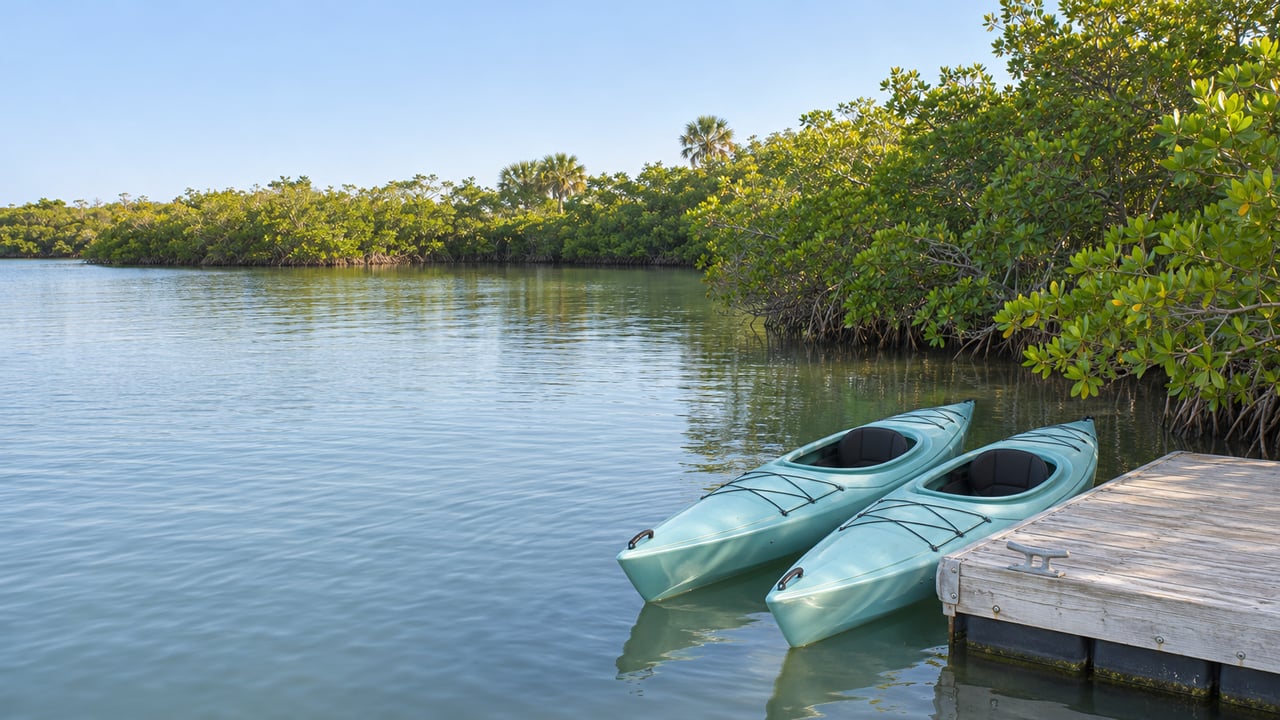
The county also brings people out to the islands itself. Its parks calendar listed a "Bring Your Own Kayak Tour" of the Lost Tree Islands for 8:30 a.m. on November 24, the Tuesday of Thanksgiving week. Future dates go up on the same Indian River County calendar.
The 1880s Dock at the End of 45th Street
For paddlers without a slip at the Grand Harbor marina, there is a public launch on the mainland shore at Gifford Dock, also called the 45th Street Dock. Vero News reported in October that this dock opened the Vero Beach area to settlers in the 1880s. Today it's a 110-foot dock running east from the bank, with a small sandy beach for launching kayaks, canoes and paddleboards and a parking area.
Gifford Dock is the reason the islands are reachable at all. Local historian Ruth Stanbridge told Vero News that Gifford Dock and the now-defunct Quay Dock in Winter Beach, about 4.5 miles north, were the main entry points for early settlers. "Before roads and before the railroads, the river was the highway," she said. The county describes the dock as a longtime gateway to the water for the Gifford community. The county's page lists snook, redfish, spotted seatrout, sheepshead and mangrove snapper as common catches off the dock.
The dock is about to change. In March, the county paid $1.64 million for a 15-acre tract next to the park's south side. On September 22, the Vero Beach City Council agreed to put $50,000 toward the project, and two days later the Florida Inland Navigation District approved a $75,000 grant for design and permitting, which the county matches with $75,000 of its own. County notices call the tract Osprey Estates and put its size at 15.47 acres.
Under the plan, a kiosk will rent kayaks and canoes for a nominal fee, and a picnic pavilion will be built on the dock itself. A walkway will connect the park to the new conservation tract, and a living shoreline will be installed against erosion. The county can apply to the Florida Inland Navigation District for construction money once design and permitting are finished. Until then, the dock and its launch beach work as they always have.
Boat Club Island, Kept Up by the Yacht Club
North of the Lost Tree Islands is Boat Club Island, which the state numbers as spoil island IR-25. It lies west of the Intracoastal Waterway, about 110 meters northwest of Channel Marker 120. The county lists it as open 24/7, with two docks and primitive camping.
Dredging for the Intracoastal Waterway created the island in the early 1950s. The name comes from how people used it. In a Vero Beach Magazine feature on the club's centennial, the Vero Beach Yacht Club recalls its members and the Boating Club of Vero Beach holding cookouts there in the 1960s and 1980s. The yacht club adopted the island in July 2016 after reading about trash on the lagoon's spoil islands. Its members clear invasive plants at least four times a year to keep the paths open.
So within a short run of Grand Harbor's docks, there are two public islands with landings, both maintained by people who live in the county. One is a county preserve under restoration. The other is a spoil island adopted by a club.
Why Winter Is the Season Out Here
Winter is when the lagoon off Grand Harbor fills up. Indian River County's lagoon guide says manatees come back to Florida waters in winter and use the lagoon to reach warm-water sites or to migrate. It counts an average of 1,032 bottlenose dolphins in the lagoon, most of them year-round residents, and more than 370 bird species. Spoil islands like the ones off Grand Harbor are listed as important nesting and foraging habitat. The state's paddling-trail guide for this part of the lagoon adds that migratory waterfowl winter here.
Recent numbers for the manatees are better. Vero News reported in January seven manatee deaths in Indian River County waters in 2025, down from nine in 2024. The National Estuary Program's Q2 2026 newsletter said seagrass is coming back in some parts of the lagoon. It also said the lagoon had gone five years without a major algal bloom or fish kill.
Florida Rambler described a two-hour paddle in kayaks rented from Vero Tackle and Watersports at Riverside Park that stopped at Joe Earman Island. The Environmental Learning Center on the Wabasso Causeway rents kayaks and runs guided group and private paddles. Its holiday-season programs are covered in our ELC guide.
Check before you go, because recent rain has closed some county land. A county advisory updated November 19 lists Jones' Pier Interpretive Center, Oslo Riverfront Conservation Area, Captain Forster Hammock Preserve and the Indian River Lagoon Greenway as inaccessible because of flooding. The Lost Tree Islands are not on that list. The conservation lands program page has the current list.
For Grand Harbor residents, the view east across the lagoon is of land the public bought, a dock that predates the roads, and an island the yacht club keeps clear. Alongside the club's 2026 to 2028 plans, Joe Earman Island makes a good destination for a Thanksgiving weekend picnic with family in town, a short run from the marina.
At Kathleen Provancher, we follow Grand Harbor's waterfront closely. If your home looks out toward Joe Earman Island and you'd like to know what that view is worth in today's market, Get Your Instant Home Valuation and our team will put it in Grand Harbor context for you.