Wondering why Riomar feels so different from other coastal neighborhoods in Vero Beach? It is not just about being close to the beach. Riomar stands out because its homes, streets, and landscaping still reflect an earlier era of barrier-island living. If you are buying, selling, or simply trying to understand what gives this area its lasting appeal, this guide will help you spot the architectural details and neighborhood patterns that define Riomar today. Let’s dive in.
Why Riomar Feels Like Old Florida
Riomar is one of Vero Beach’s earliest barrier-island neighborhoods, with roots tied to early-20th-century development and the country club era. Local history places its rise across the 1910s, 1920s, and into 1930, rather than linking it to one single founding year. That long early timeline matters because many of the homes, lot layouts, and streetscapes were shaped before later waves of larger coastal development.
The City of Vero Beach has long emphasized beautification and preservation as part of its identity. City history notes that beautification efforts date back to 1915, and those values still show up in the tree canopy, historic landscapes, and planning approach that help Riomar keep its distinct sense of place.
In simple terms, Riomar’s charm comes from continuity. You see it in the lower-scale streets, mature landscaping, and homes that feel connected to the land and climate rather than designed to dominate them.
Frame Vernacular Shapes Riomar’s Character
If you are trying to name the look many people call “Old Florida,” Frame Vernacular is a great place to start. In Vero Beach’s 1990 historic survey, Frame Vernacular made up 52% of the 370 buildings surveyed citywide, making it the most common early residential building type documented.
These homes were typically built with wood-frame construction and often feature simple rectangular forms, one- or two-story layouts, masonry piers, and broad porches. Roof forms were designed with cross-ventilation in mind, which makes sense in a warm coastal climate like Vero Beach.
In the Riomar-area inventory, many homes on Riomar Drive and nearby streets date from 1919 through the 1930s and are classified as Frame Vernacular. That is a big reason the neighborhood still feels relaxed, shaded, and porch-forward.
What to Look For in Frame Vernacular Homes
When you walk or drive through Riomar, look for a few recurring details:
- Broad front or wraparound porches
- Modest scale compared with newer coastal homes
- Rectangular massing and simple rooflines
- Homes positioned comfortably within shaded lots
- A visual focus on airflow, outdoor living, and everyday function
These homes are not flashy, and that is part of their appeal. Their value often comes from how naturally they fit the streetscape and landscape around them.
Mediterranean Revival Adds Drama and Prestige
While Frame Vernacular gives Riomar much of its everyday Old Florida feel, Mediterranean Revival adds another important layer. In the same city survey, Mediterranean Revival accounted for 23.5% of surveyed buildings, making it the second most common style documented.
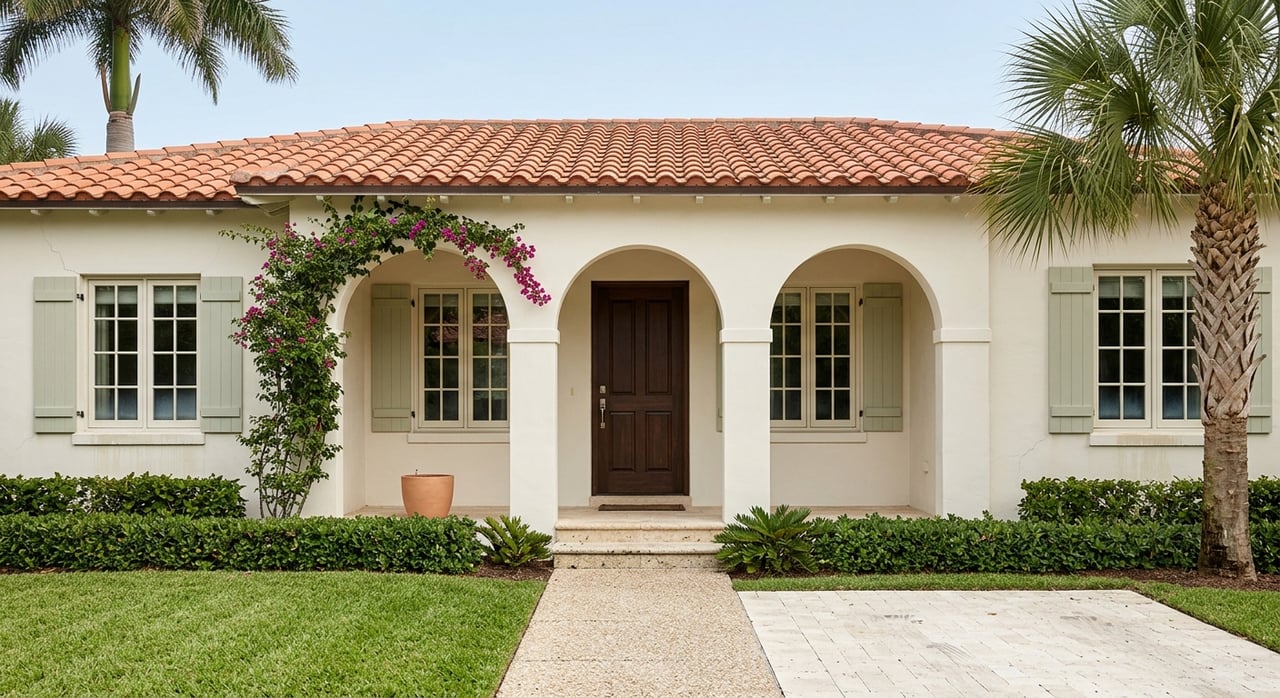
This style became popular during Florida’s 1920s land boom and is usually identified by stucco walls, flat or hip roofs, parapets, barrel tile or ceramic tile roofing, arched openings, and casement or double-hung windows. In Riomar, examples appear around Royal Palm Boulevard, Royal Palm Place, Club Drive, Granada Avenue, Pine Avenue, and nearby streets.
Mediterranean Revival carries extra meaning here because of the Riomar Clubhouse. The Florida historical marker describes the 1930 clubhouse as a Spanish-design building with stucco exterior walls and pecky cypress beams. Because one of Riomar’s best-known landmarks reflects this design language, the style has become part of the neighborhood’s visual identity.
Why Mediterranean Homes Fit Riomar So Well
Mediterranean and Spanish-inspired homes work well in Riomar because they complement the area’s early development pattern and lush coastal setting. Their courtyards, textured materials, and shaded outdoor spaces feel appropriate for the climate and the neighborhood’s history.
For buyers, these homes often offer a sense of permanence and architectural presence. For sellers, they can signal the kind of timeless curb appeal that helps a property stand out beyond square footage alone.
Other Styles You May See in Riomar
Riomar is not a one-style neighborhood. The city survey also documents smaller numbers of Bungalow, Minimal Traditional, Colonial Revival, Monterey, and Masonry Vernacular buildings in Vero Beach, and the Riomar inventory includes some of that variety as well.
Bungalows made up 9% of the citywide survey and were especially popular in Florida between 1910 and 1930. They are generally low in profile, horizontally oriented, and defined by wide eaves and porches.
You may also notice Colonial Revival or Monterey influences in some homes. That variety is part of what makes Riomar feel layered and authentic rather than overly uniform.
Streetscape Matters as Much as the Homes
In Riomar, architecture and landscape work together. Local coverage of Old Riomar describes sandy lanes, live oaks, shell-stone roads, lush landscaping, and a tree-canopied setting. Those features help explain why the neighborhood feels intimate and visually calm even in a high-value coastal location.
The City of Vero Beach’s preservation framework supports that idea. The city says local designation can be based not only on architecture, but also on aesthetic significance, including distinctive neighborhood motifs, special siting, and notable scale.
That means the feeling of Riomar is not created by houses alone. Setbacks, lot canopy, road texture, and the way homes relate to the street all play a role in the neighborhood’s appeal.
Why Riomar Still Feels Low-Scale
Riomar’s human-scale feel is not accidental. The city explains that a 1978 zoning rewrite followed controversy over mid- and high-rise beachside development, and later changes reduced allowable densities and intensities through the 1980s and 1990s.
That planning history helps explain why Riomar still reads as comparatively intimate and visually coherent. Even as beachside property values have increased, the neighborhood has retained a scale that many buyers find hard to replicate.
How Newer Homes Can Still Fit In
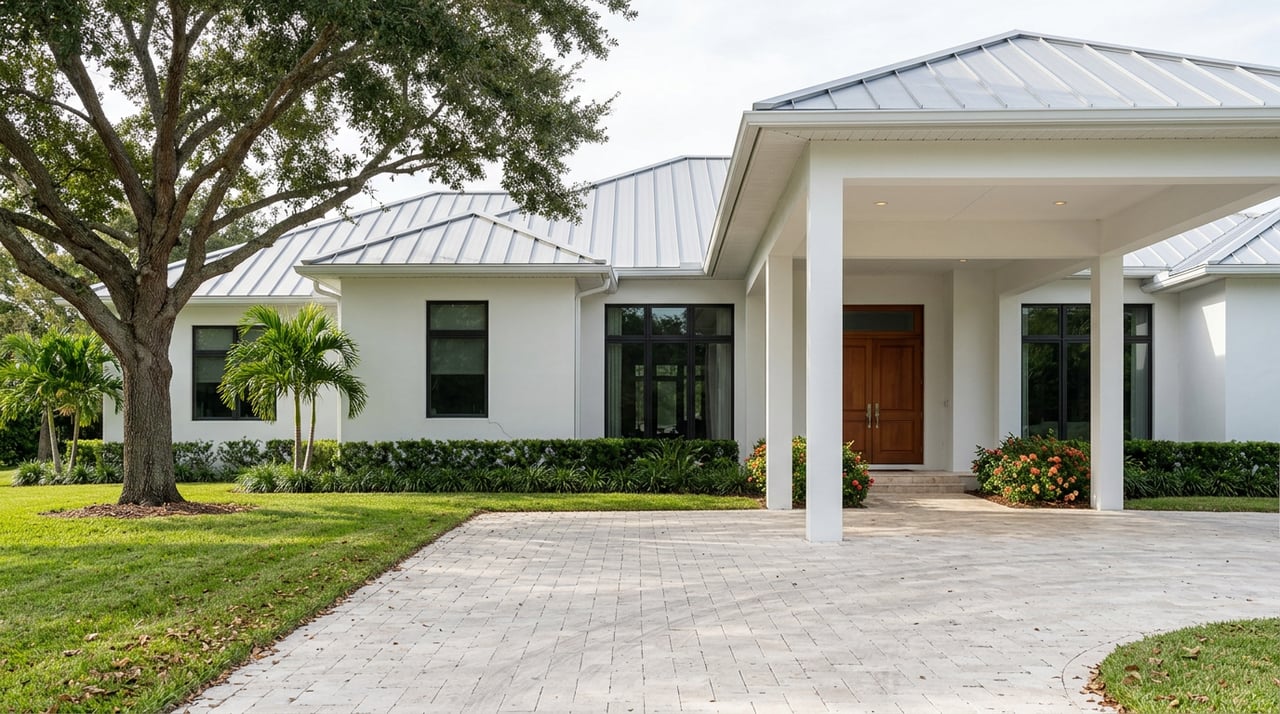
Not every notable home in Riomar is original to the early 20th century. Local reporting shows that some newer or heavily renovated homes have maintained the neighborhood’s feel by respecting its key design cues.
One local feature described a 2005-built home in Old Riomar that looked older because of its Mediterranean-style massing, courtyards, and landscaping. Another feature on a renovated Riomar home highlighted efforts to preserve an Old Florida feel while updating interiors and systems.
The lesson is simple. Newer construction is not automatically out of place if it respects scale, roof shapes, materials, and landscape patterns that already define the area.
What Buyers Should Notice in Riomar
If you are shopping for a home in Riomar, it helps to look beyond finishes and square footage. This neighborhood often rewards buyers who pay attention to the relationship between the house and its setting.
Focus on details like:
- Porch presence and outdoor living areas
- Rooflines and overall scale
- Mature landscaping and tree canopy
- Setback from the street
- Exterior materials and architectural consistency
- How the home fits with neighboring properties
Riomar’s appeal is strongest when architecture, lot, and streetscape feel connected. That is often what gives a property its lasting character.
What Sellers Should Highlight
If you are selling in Riomar, buyers are often responding to more than luxury finishes or updated interiors. They are also noticing whether a home reflects the continuity that makes the neighborhood special.
That means features like preserved rooflines, inviting porches, established landscaping, and harmonious exterior materials can shape perception in meaningful ways. A thoughtful presentation should show not only the home itself, but also how it lives within Riomar’s broader visual story.
For sellers of premium properties, this is where hyperlocal positioning matters. A marketing strategy that understands Riomar’s architectural language can help frame your home in a way that speaks directly to design-minded and lifestyle-focused buyers.
Preservation and Remodeling in Riomar
If you own or plan to buy an older home in Riomar, preservation rules may be part of the picture. The City of Vero Beach says exterior work on locally designated properties may require a Certificate of Appropriateness, and the city reviews whether proposed changes are compatible with the surrounding buildings, sites, and streetscape.
That does not mean change is impossible. It means design decisions may also be compliance decisions, especially when a property contributes to a distinctive neighborhood motif or scale.
This is especially relevant now because a 2024 city neighborhood-protection memo notes a long-term trend of teardown and rebuild activity in Riomar, with larger homes raising more questions about scale compatibility in some areas. For buyers and sellers alike, understanding that context can help you plan more confidently.
Why Architecture Still Influences Value Perception
Riomar’s prestige is not based on one feature alone. It comes from a combination of historic roots, recognizable home styles, mature landscaping, and a streetscape that still feels scaled to people rather than vehicles.
The city’s preservation criteria make clear that aesthetic continuity matters. When a neighborhood maintains a distinctive visual identity, that consistency can shape how people perceive its desirability and long-term appeal.
For anyone considering a move in Riomar, that is the big takeaway. You are not just evaluating a home. You are also evaluating how that home fits into one of Vero Beach’s most established and visually cohesive coastal neighborhoods.
If you are thinking about buying or selling in Riomar, working with someone who understands these micro-market details can make a real difference. For tailored guidance on Riomar homes, architectural character, and high-touch local representation, connect with Kathleen Provancher.
FAQs
What home styles are most common in Riomar?
- The strongest historic patterns in Riomar point to Frame Vernacular and Mediterranean Revival homes, with smaller numbers of Bungalow, Colonial Revival, Monterey, and related styles also present.
What makes Riomar feel like Old Florida?
- Riomar’s Old Florida character comes from its early-20th-century homes, broad porches, modest scale, mature landscaping, tree-canopied streets, and a coastal layout shaped before later large-scale development.
Can newer homes fit the character of Riomar?
- Yes. Local examples show that newer homes and major renovations can fit well when they respect neighborhood cues like scale, roof shape, materials, courtyards, and landscaping.
Do older Riomar homes have remodeling restrictions?
- Some do. Exterior work on locally designated properties may require a Certificate of Appropriateness from the City of Vero Beach, which reviews compatibility with the surrounding streetscape.
Why does architecture matter so much in Riomar real estate?
- In Riomar, buyers often respond to more than size or finishes. Architectural style, lot canopy, setbacks, porches, and overall visual harmony all contribute to the neighborhood’s identity and value perception.