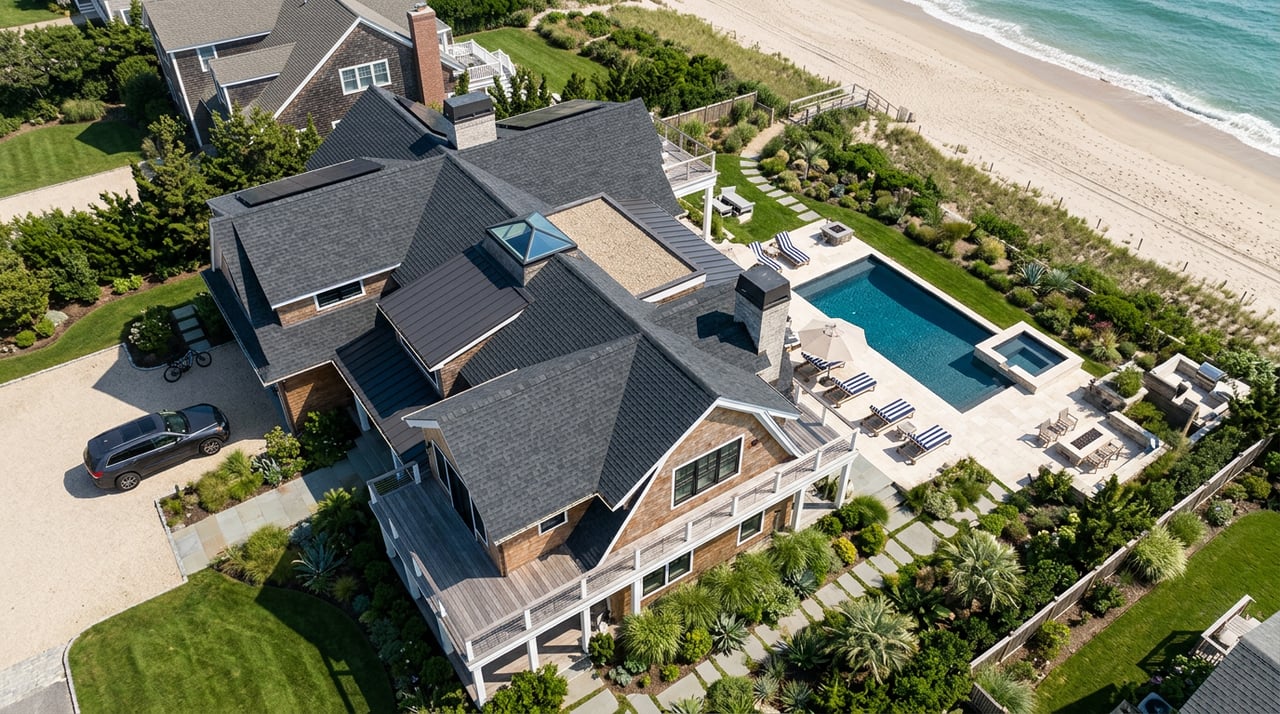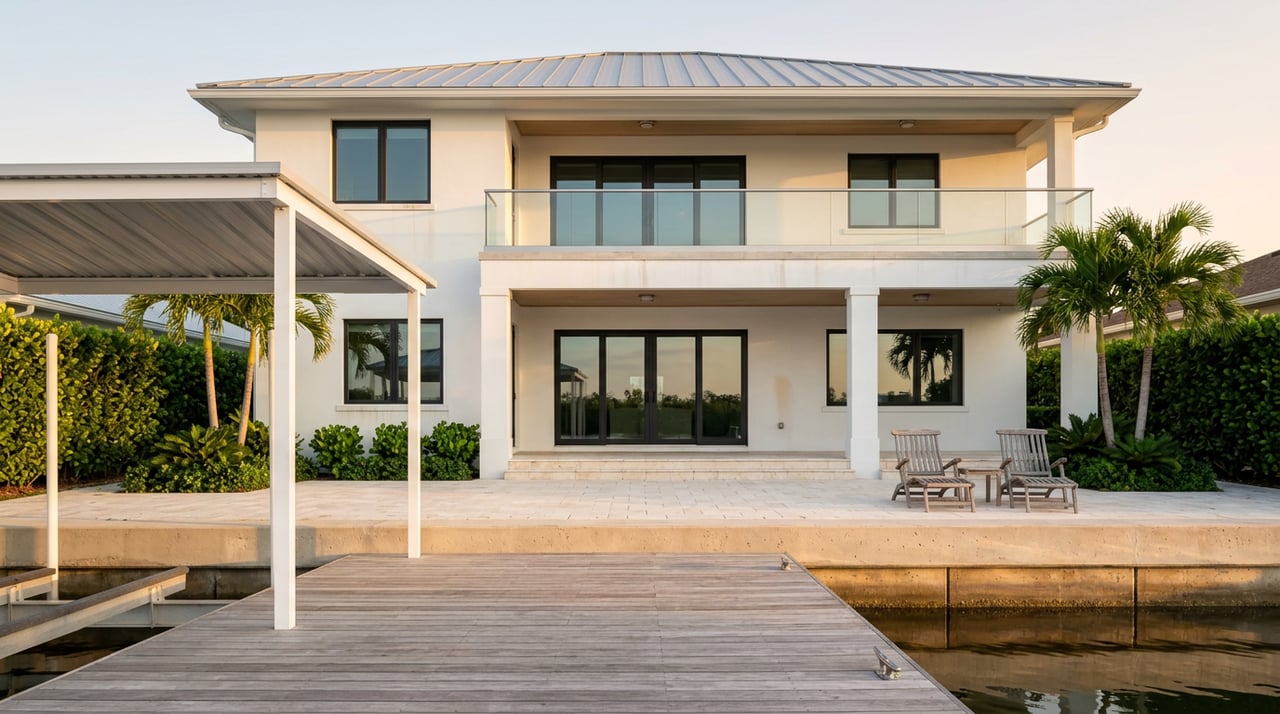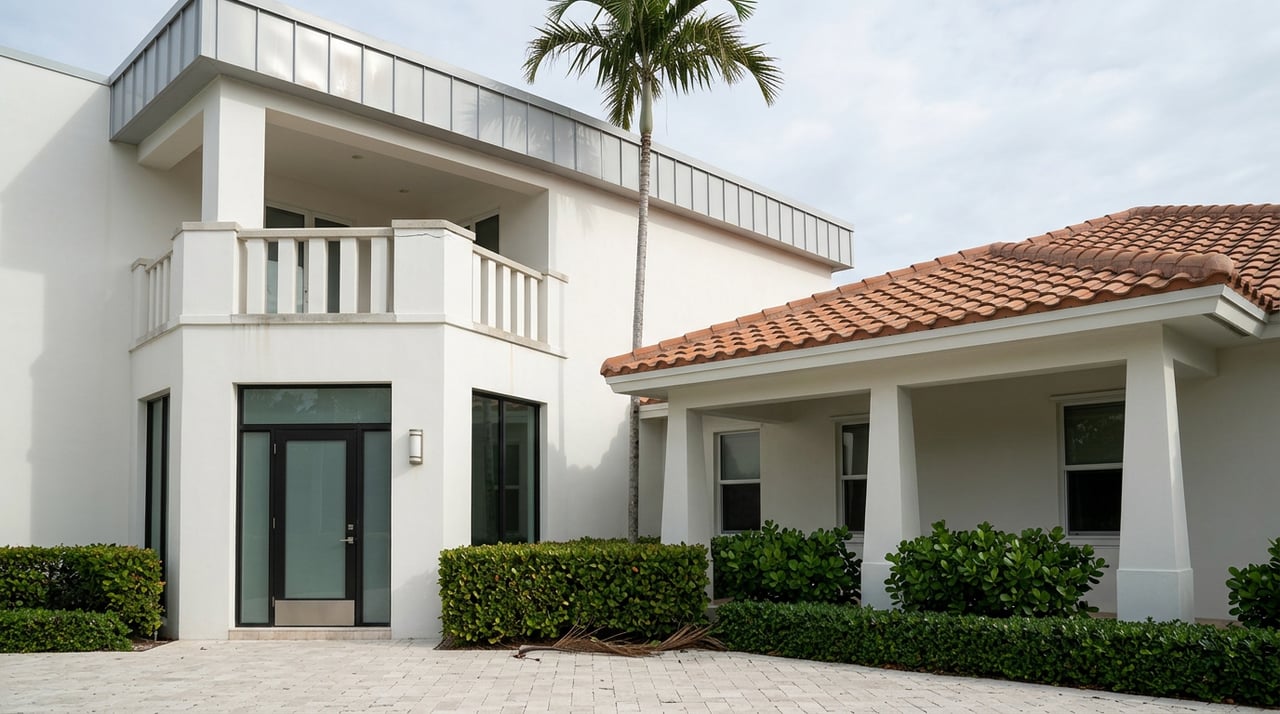
Two listings come up in the same guard-gated community. Same square footage, roughly the same asking price, both behind the same manned entrance off A1A. Why would one of them cost nearly double to own once you factor in the association bill?
That question sits at the center of River Club at Carlton, the riverfront community in the town of Indian River Shores just north of John's Island. It is a fair question, and the answer has nothing to do with finishes, view, or lot size. It has to do with which of four ownership structures you are actually buying into, because in River Club that decision changes your annual carrying cost more than almost any other line item on the closing statement.
One Gate, Four Kinds of Ownership
River Club was not built in a single pass, and that history still shapes what a buyer sees on the MLS today. The community traces back to developer Mason Simpson in the early 2000s, laid out across roughly 120 acres between A1A and the Indian River Lagoon with a string of freshwater lakes running through it. Construction stalled during the downturn, and the property was later purchased and revived by Ironshore Capital Partners, an investment firm that brought in Beachland Homes, an Arthur Rutenberg franchise run by the Genoni family, as the community's exclusive builder. Beachland built out finished lots through the 2010s and later added South Shore, a roughly 30 home phase in a British West Indies style, with lots priced from the mid $200,000s and package homes running from about $1 million to $1.5 million. Sales throughout this period ran through Treasure Coast Sotheby's International Realty.
That build history means today's resale inventory isn't one uniform product. It's estate homes fronting the lagoon, standard single-family houses, an attached-home section called Weybridge, and four separate condo buildings where each building holds six units and residents enter their unit directly from a private elevator. Two clubhouses anchor the amenity package, each with its own pool, and the Yacht Club side adds four guest suites for visiting family, a Har-Tru clay tennis court, and kayak access to the river. A buyer touring the community in a single afternoon can walk from a 2020s spec home into a 2000s-era estate house into a condo tower, all under the same gate.
Why the Fee Line Splits in Two
Here is where the cost story gets interesting. One reporting source put annual dues for single-family homes in River Club at roughly $7,564, while the low-maintenance condominiums carried fees closer to $15,652 a year, nearly double. A separate, more recently verified compliance record put the River Club Property Owners Association's median fee at about $469 a month, or roughly $5,628 annually, as of July 2026. Those two figures don't match exactly, and that mismatch is itself the lesson: published HOA numbers age quickly and vary by who last updated them, which is exactly why a serious buyer pulls the current estoppel certificate rather than trusting a listing sheet's fee line.
What doesn't vary is the reason the gap exists at all. A single-family HOA fee in River Club typically covers lawn care, common area maintenance, and security at the gate. A condo association fee in one of the four elevator buildings covers all of that plus a private elevator, shared roofs, and structural components that a detached house owner never touches. Reserve studies for buildings with elevators and shared structure track dramatically more line items than a single-family HOA does, and every one of those line items gets funded through the monthly assessment. The condo fee isn't padding. It's paying for infrastructure the single-family owner next door doesn't have.
| Ownership type | What the fee typically funds | Reported annual range |
|---|---|---|
| Single-family / estate home | Lawn care, common areas, gate security | roughly $5,600 to $7,600 |
| Condo (private-elevator buildings) | All of the above plus elevator, shared roof, building structure | roughly $15,600 |
Treat the dollar figures as a starting point for questions, not a final number. Ask the seller's agent for the current certificate before you write an offer.
Two Associations Means Two Certificates
River Club's ownership split isn't just a fee difference, it's a governance difference. The single-family side and the condo side are documented as separate association entities, which means a buyer moving through due diligence may be dealing with two different sets of governing documents, two different violation histories, and two different estoppel requests depending on which product type they're buying.
Florida law is specific about what that paperwork has to contain. Under Florida Statute 720.30851, an association must deliver an estoppel certificate within 10 days of a request, the certificate has to disclose 19 separate items including the assessment paid-through date and any outstanding rule violations tied to the parcel, and the maximum preparation fee an association can charge is capped at $299. That cap and that 10-day clock apply the same way whether you're buying a Weybridge attached home or a unit in one of the elevator buildings. What changes is the content of what comes back, because a condo association's reserve disclosures run longer than a single-family HOA's.
The Rule That Changed for Condo Buyers in 2025
If you're looking specifically at one of River Club's four condo buildings, there's a more recent wrinkle worth knowing before you sign. Florida's CS/CS/HB 913, enacted in 2025, amended state condo law and, among other changes, extended a resale buyer's contract cancellation window from three business days to seven, excluding Saturdays, Sundays, and legal holidays, counted from execution of the contract. That extra runway matters most in exactly the kind of building River Club has: private-elevator condos where a buyer needs real time to review reserve funding and structural inspection records before the right to walk away closes.
That rule doesn't apply to the single-family homes or the Weybridge section. It's a condo-specific protection, which means the paperwork clock itself now differs depending on which of River Club's four ownership types you're purchasing, on top of the fee gap and the separate association certificates.
What This Means When You're Comparing Two Listings
Put the pieces together and the practical takeaway is straightforward. When two River Club listings show a similar price, don't stop at square footage and view. Ask which association governs the unit, request the current estoppel certificate rather than relying on a printed fee sheet, and if you're looking at one of the four condo buildings, build the seven-day rescission window into your timeline rather than assuming the older three-day standard.
It's also worth remembering that River Club's build-out happened in at least three distinct waves, from Simpson-era original construction through the Beachland/Rutenberg years to the South Shore phase. Roof age and construction vintage differ across those waves even within the single-family category, which affects everything from wind mitigation inspections to insurance underwriting. A newer roof under Florida's mitigation credit system can meaningfully change a homeowner's insurance quote compared to an older one two doors down, even at the same price point.
None of this makes River Club a harder place to buy. It makes it a community where the sale price is the beginning of the math, not the end of it.
Does every home in River Club belong to the same HOA?
No. The single-family and condo sections are documented under separate association structures, so governing documents, violation histories, and fee schedules can differ by product type even within the same gate.
What does the higher condo fee actually pay for?
Based on the community's structure, the condo fee in River Club's four elevator buildings covers shared elements a single-family HOA doesn't carry, including the private elevators and building-wide roof and structural maintenance, on top of the same lawn care, common areas, and gate security every resident shares.
Does the new seven-day rule apply to every home in River Club?
No. The extended rescission window under Florida's 2025 condo law change applies to resale condominium purchases. Single-family and Weybridge attached-home purchases follow the standard contract timelines outlined in the purchase agreement.
Buying into a community with this much layered history rewards a buyer who asks the right questions before the offer goes in, not after. Team Provancher works Vero Beach's gated riverfront communities daily, including River Club at Carlton, and can walk you through which association governs a specific listing, what the current estoppel actually shows, and how the numbers compare across the community's four ownership types before you're locked into a contract clock you didn't expect.